
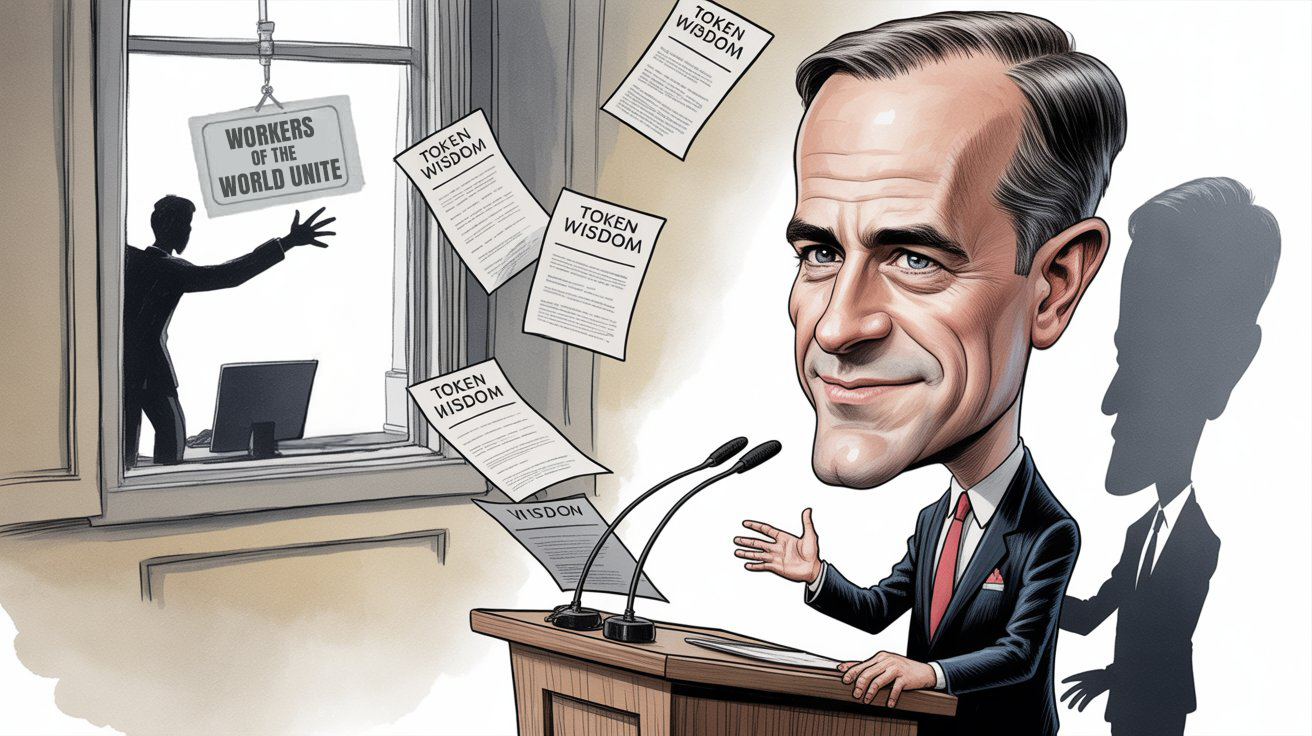



Nothing in the world is more powerful than an idea whose time has come.
— According to Victor Hugo, whose revolutionary call against oppression is now routinely trotted out at Davos to sell ESG metrics


The Token Wisdom Rollup ✨ 2025
One essay every week. 52 weeks. So many opinions 🧐

How Canada's Prime Minister Just 'Channeled' My Newsletter (And I'm Not Even Mad)
That awkward moment when your newsletter gets delivered as a keynote at Davos…
January 20th, 2026: Mark Carney takes the stage at Davos. His "landmark address" declares the rules-based order dead and calls for a radical restructuring of middle-power coalitions. His framework? Pure Václav Havel.
I've been writing this speech for a year in "Token Wisdom," 2000 words at a time.
Now, before my lawyer friends get excited: I'm not claiming Canada's Prime Minister literally trained on my newsletter. (Though if anyone has access to those compute logs... I'm not saying I'm not curious.)
What I am saying is that there are only four ways to explain how perfectly his speech mirrors my year-long analysis:
- Same elephant, different viewing angles
- Great minds think alike (I'll take it)
- Ottawa has excellent taste in newsletters
- The universe (simulation) has a sense of humor =)
Once you start digging, the receipts are impossible to ignore. Let me show you what I mean.
Foreign Policy by Newsletter
Week 52 of Token Wisdom:
"Silicon Valley's memory merchants have perfected curated forgetting. Their algorithms don't just bury inconvenient truths—they replace them with carefully selected distractions."
Carney at Davos:
"We knew the story of the international rules-based order was partially false... So we placed the sign in the window. We participated in the rituals, and we largely avoided calling out the gaps between rhetoric and reality."
One's algorithmic amnesia, one's diplomatic amnesia: Same pattern.
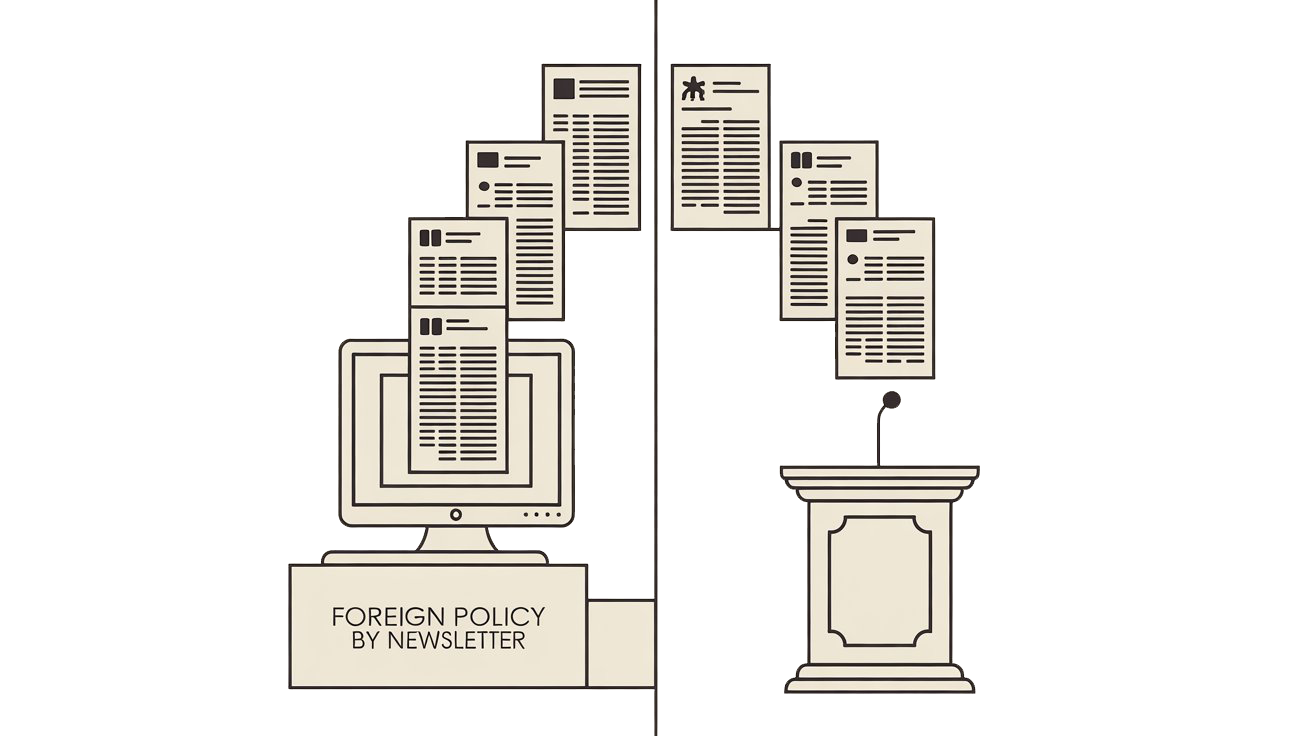
Both systems run on collective agreement to forget uncomfortable truths. Silicon Valley uses feeds. International relations uses courtesy.
Past tense intentional.
The echo chamber doesn't stop at memory. Check out how we both dissected sovereignty:
"When everyone claims sovereignty, no one has it. Democracy fragments along identity lines while true political authority dissolves."
Carney:
"When we only negotiate bilaterally with a hegemon, we negotiate from weakness... This is not sovereignty. It's the performance of sovereignty while accepting subordination."
I saw it domestically. He saw it internationally. Same conclusion: Fragmentation masquerading as autonomy is just subordination with better branding.
Want more? There's more. Let's talk about the great governance grift:
"We're witnessing startup methodology applied to governance itself, replacing democratic coordination with corporate management systems."
Carney:
"Great powers have begun using economic integration as weapons, tariffs as leverage, financial infrastructure as coercion."
Governance-as-transaction.
The startup state model: Citizens become users. Democracy becomes customer relationship management.
The hegemon state model: Allies become clients. Security becomes a subscription service.
Same scam, different scale.
Cute parallels? Sure. But then came the moment that took this from "huh, weird" to "wait, WHAT?"
Parallel Havels and Uncanny Convergence
Here's where it gets downright eerie.

For a year, I've written about performative participation in known fictions. About systems maintained by collective pretense. About the moment keeping up appearances costs more than telling truth.
And then, as if on cue, Carney walks into Davos and drops Havel's greengrocer parable:
A shopkeeper displays "Workers of the world unite!" Not from belief—from self-preservation. Everyone performs. The system persists.
Then Carney delivers the money line:
"We are taking the sign out of the window."
Chef's kiss.
Could not have written it better myself.
Actually, wait. I did write it better. Week 35: "How Your Driver's License is Santa Claus With Government Backing."
We both explored governance by collective make-believe; my version with more snark, his with diplomatic gravitas.
Carney got the gravitas. I got the metaphor about graduating from Santa Claus to fairy tales with late fees and armed enforcement.
But remarkably, we both got to the same place: The emperor has no clothes, and pretending otherwise is now more dangerous than saying it out loud.
The weirdness goes deeper. Our systems thinking? Pretty much identical.
The Geometry of Power
Carney's big idea? "Variable geometry coalitions." Ukraine defense here, Arctic sovereignty there, critical minerals club everywhere else.
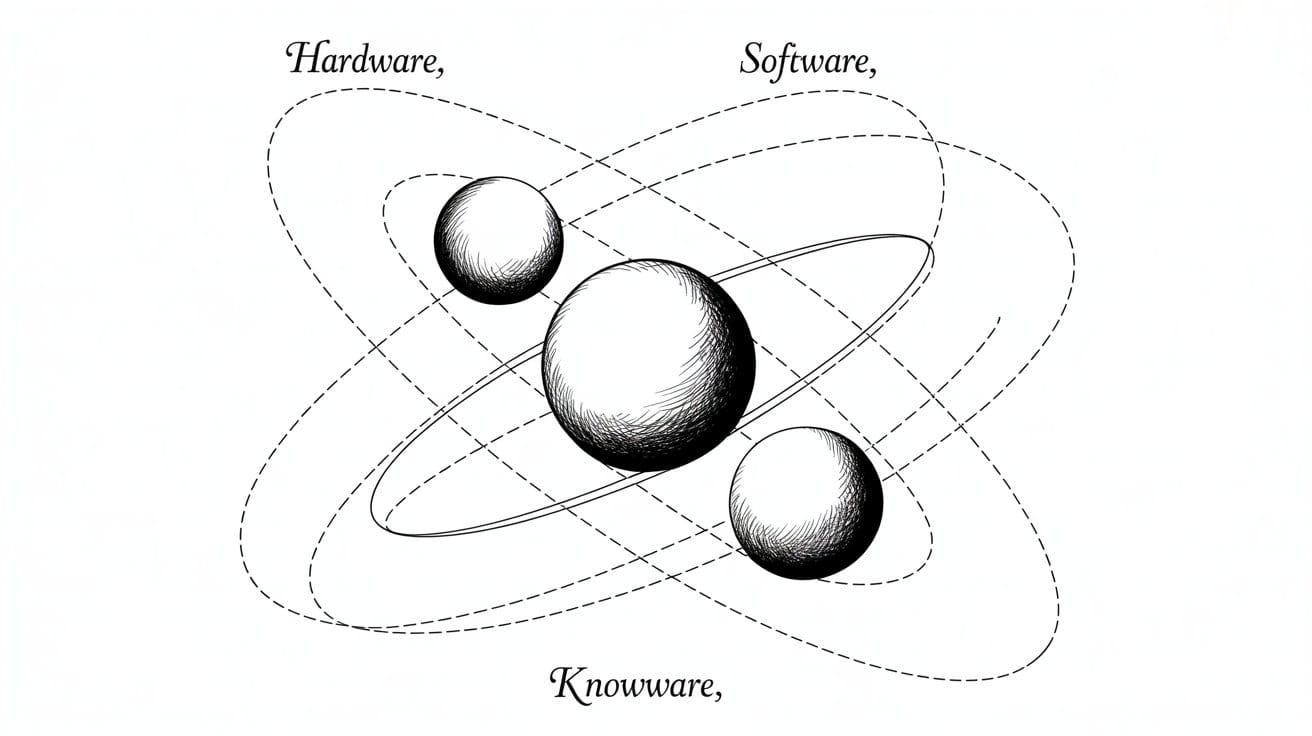
Week 41 of Token Wisdom:
"We've birthed Knowware: intelligence crystallized into infrastructure. Now we're in a cosmic dance—Hardware, Software, and Knowware spinning in chaotic orbits. Welcome to the digital age's three-body problem."
Three massive objects, no fixed rules, unpredictable orbits: the three-body problem.
Carney's solution: Stop trying to predict. Build flexible coalitions that shift based on context.
My solution: Accept the chaos. Build systems that adapt.
Same answer. Different domain.
I mapped it in tech. He mapped it in geopolitics. Both reached the same insight: Complex systems can't be simplified. They can only be navigated.
It gets weirder. Even stranger things happen. We both see the same hidden physics governing these supposedly stable systems.
The Supersaturation Thesis

"Platforms promised infinite growth but now operate like supersaturated solutions—stable-looking but fundamentally unstable. One disturbance crystallizes everything."
Carney:
"The multilateral institutions on which middle powers have relied—the WTO, the UN, the COP—the architecture, the very architecture of collective problem solving are under threat."
We both see systems that look stable but are ready to snap.
Digital platforms: Maxed extraction, primed for phase change.
International institutions: Peak tension, primed for reorganization.
My trigger: Regulation, mass exodus, AI revolt.
His trigger: Trump's "51st state" gambit, weaponized tariffs, Arctic crisis.
Different triggers.
Same physics.
By this point, coincidence is off the table. The overlaps are too precise, too structured.
The Structural Symmetry is Beyond Comprehension
What started as amusing parallels now appears as something more profound. The structural alignment? Yeah, the timeline is glitching.
My framework (52 weeks):
- Identify and name the fiction
- Map and plot the breaking points
- Trace and count the casualties
- Propose and design the escape hatch
Carney's framework (one speech):
- Fiction: "rules-based order"
- Breaking point: "rupture, not transition"
- Casualties: "subordination"
- Escape hatch: "variable geometry coalitions"
This isn't mere coincidence or vague similarity.
This is intellectual convergence so precise it's uncanny.
Forget the mechanical similarities. The real story? We've both spotted the same fundamental truth about our historical moment.
The Pattern Repeats
Last week, I wrote about how we spent forty years gutting our institutions—universities, newsrooms, civic infrastructure—then blamed AI for revealing the rot. How we turned public goods into profit centers, defunded expertise, and hollowed out democratic institutions, then acted shocked when trust collapsed and systems failed.
Carney's speech is the geopolitical version of that exact same story.
We spent decades performing belief in a "rules-based order" while the powerful extracted value without constraint. We defunded multilateral institutions, subordinated international law to great power interests, and treated sovereignty as performance art—all while placing the sign in the window that said everything was fine.
The pattern is identical:
Domestic: Marketize public goods (education, news, civic life)
International: Weaponize economic integration (trade, finance, supply chains)
↓
Domestic: Defund institutions (universities, newsrooms, libraries)
International: Subordinate frameworks (WTO, UN, multilateral cooperation)
↓
Domestic: Perform belief while extracting (claim to educate while creating debt traps)
International: Perform compliance while extracting (claim to protect while demanding tribute)
↓
Domestic: Blame the diagnostic tool (AI killed democracy!)
International: Blame the disruptor (Trump broke the world order!)
↓
Domestic: Miss the actual problem (40 years of institutional gutting)
International: Miss the actual problem (decades of performed consent to extraction)
The difference?
Carney's admitting it. Out loud. At Davos.
When a sitting Prime Minister uses the exact same framework I used last week to diagnose domestic institutional collapse—to diagnose international institutional collapse—that's not coincidence.
That's confirmation the pattern is real.
And it's not limited to education and geopolitics. This same pattern is playing out across healthcare, infrastructure, finance, and democratic institutions themselves. We've been hollowing out our civilization while performing belief in its stability.
The termites have been eating for forty years. We just keep blaming the earthquakes.
The Truth No One Liked and Subscribed 🔔
The real revelation here isn't about who said what first. It's that we're watching the same meta-crisis unfold across every major system simultaneously: platforms, markets, institutions, international orders—all failing at once.
Our shared diagnosis?
Systems sustained by collective performance of belief in fictions collapse when the cost of pretense exceeds the cost of truth.
My version (domestic):
- Stop pretending platforms are neutral
- Stop pretending AI is "just a tool"
- Stop pretending institutions derive authority from anything but collective agreement
- Stop pretending extraction is innovation
Carney's version (international):
- Stop pretending the rules-based order functions
- Stop pretending hegemony provides public goods when it's extractive
- Stop pretending accommodation buys safety
- Stop pretending bilateral deals preserve sovereignty
Our shared conclusion: The cost of pretending now exceeds the cost of truth.
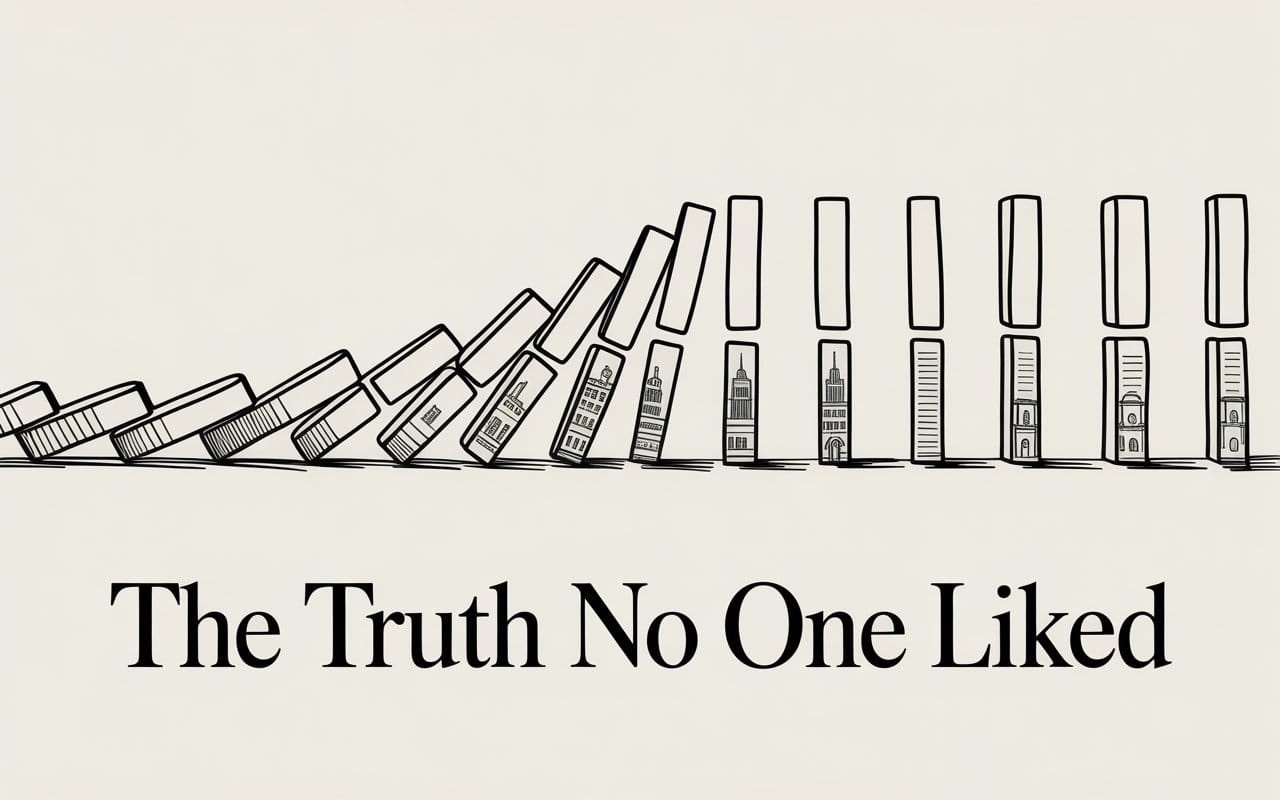
And we both proposed the same solution:
Radical honesty as strategic advantage.
When you understand how complex systems fail, you see the same patterns everywhere. The dynamics that hollowed out American universities are the same dynamics that hollowed out American hegemony.
Different domains. Same physics. Same collapse pattern.
A Systems Architect and a Prime Minister Walk Into Davos
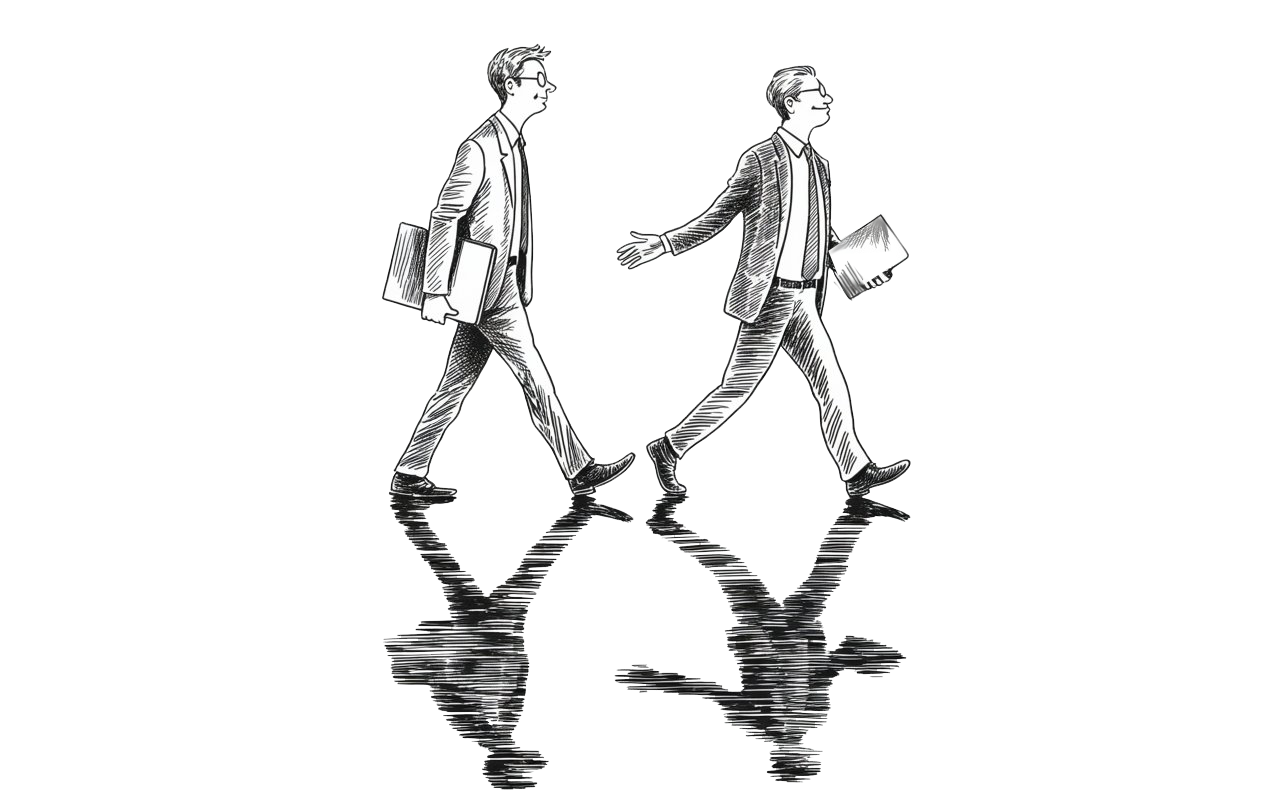
So what explains this remarkable synchronicity? I see three possibilities:
1. Convergent analysis.
Pattern recognition cuts across domains. See one complex system fail, you've seen them all. Digital platforms or diplomatic protocols—same collapse dynamics.
2. We're both responding to the zeitgeist.
Post-WWII order, Silicon Valley, global finance—all built on performed beliefs. All cracking now. Not because the fictions failed, but because performing them got too expensive.
3. Ottawa's research team has excellent taste.
Look, if Carney's team wants to cite sources, my footnotes are ready.
Origin story aside, here's the kicker: same ideas, different receptions.
The Credibility Game
Here's where the similarities end and the disparities begin: When Carney says it at Davos, it's visionary leadership. When I write it in a newsletter, it's doom posting. Why?
Credibility anchoring. Ex-banker turned PM outranks independent analyst. Authority beats insight.
Audience expectations. Davos wants grand strategy. Tech newsletters get hot takes.
Stakes visibility. National sovereignty feels urgent. Digital sovereignty feels optional.
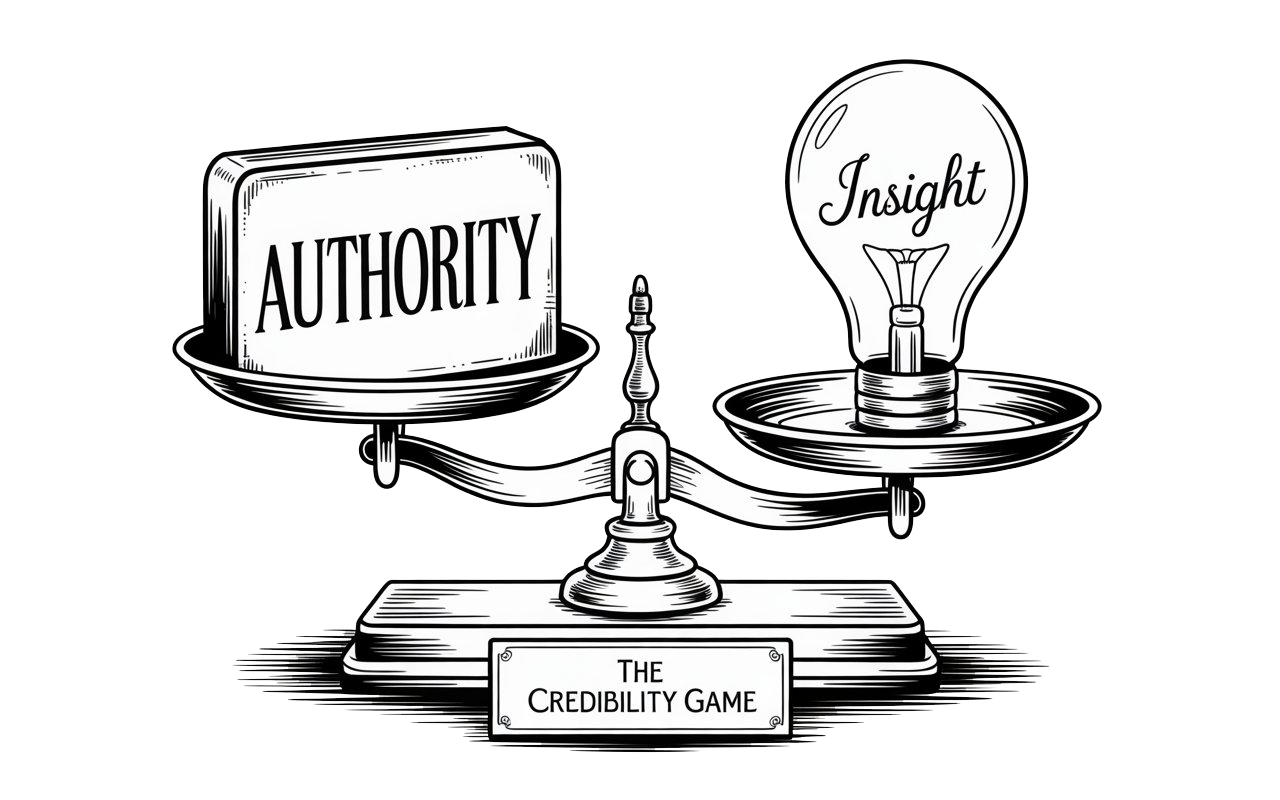
Here's the rub:
His speech proves my framework works.
My pattern—fiction, performance, crisis, honesty—is playing out in geopolitics right now.
And the implications are profound. If it works for nation-states, watch what happens next with platforms, AI, and markets.
The Universal Pattern
Zoom out far enough, and you see it clearly: not separate crises, but one mega-crisis wearing different masks.
The Domestic Version:
- Universities: Defund → adjunctify → blame AI for hollow expertise
- Newsrooms: Starve → consolidate → blame platforms for dead journalism
- Democracy: Extract → subordinate → blame social media for collapsed trust
The International Version:
- Alliance Structures: Extract → weaponize → blame Trump for broken relationships
- Rules-Based Order: Violate → perform → blame "authoritarianism" for its collapse
Multilateral Institutions: Defund → subordinate → blame "populism" for their irrelevance

Three masks. One face. The underlying fiction:
"Act like it works, and it works."
Until enough people stop acting.
Then it doesn't reform.
It reorganizes.
That's not prediction. That's pattern recognition.
And here's what makes it profound: once you see the pattern, you can't unsee it.
- Healthcare? Same pattern. (Marketize → extract → wonder why Americans pay more for worse outcomes)
- Infrastructure? Same pattern. (Defund → privatize → act shocked when bridges collapse)
- Pension systems? Same pattern. (Raid → gamble → blame "demographics" when they fail)
- Climate response? Same pattern. (Delay → profit → blame "China" for inaction)
We've been running the same scam on ourselves for forty years.
Different sectors. Same playbook. Same collapse dynamics.
The AI panic and the Trump panic serve the same function: they transform structural crises into technological/personal problems. They promise ethics frameworks or different leadership can fix what decades of policy choices broke.
But the building is full of termites.
Blame the earthquake for the collapse, and you guarantee the next one will be worse.
What This Means
Not gonna lie—watching your private theories get delivered as a keynote at Davos hits different.
But here's why it matters:
If a Prime Minister can stand before global elites and say "we're taking the sign out of the window"—if he can name the performance and declare it finished—then maybe the framework isn't just analytical.
Maybe it's operational.
Maybe exposing the gap between rhetoric and reality isn't just good analysis.
Maybe it's good strategy.
And maybe—just maybe—the real power move isn't continuing to perform belief in dying fictions.
Maybe it's being the first to stop.
The Prescription (Because Analysis Without Action is Just Therapy)
Last week, I laid out what fixing domestic institutions requires. Not ethics panels—actual reconstruction:
Universities:
- Restore funding to 1980 levels (40% increase in state support)
- End adjunctification
- Cancel student debt
- Rebuild tenure-track positions
Journalism:
- Public investment in local news infrastructure
- Break up tech monopolies controlling information flow
- Fund investigative journalism as public good
- Rebuild civic information architecture
Democracy:
- Progressive taxation (capital gains = income)
- Break up concentrated corporate power
- Invest in community infrastructure (libraries, parks, civic spaces)
- Rebuild the places where people actually meet
Carney just gave us the international version:
Geopolitics:
- Variable geometry coalitions (issue-specific, values-aligned)
- Strategic autonomy through diversification
- Collective resilience investments
- Rebuild sovereignty through coordination, not fortresses
The common thread?
Stop defending hollow institutions.
Start rebuilding functional ones.
Stop performing belief in systems we know are broken.
Start building systems that work as described.
This isn't about regulating AI or containing Trump or managing "populism."
This is about reversing forty years of institutional extraction.
That's the prescription.
Everything else is aspirin for a gunshot wound.
The Real Test
Here's how we'll know if Carney's serious—and if the framework actually works:
Short term (6 months):
- Do other middle powers defect? (Australia, South Korea, Nordic countries?)
- Do coalition announcements bypass traditional institutions?
- Does rhetoric shift from diplomatic courtesy to strategic candor?
Medium term (2 years):
- Do new institutions actually function as described?
- Does variable geometry generate measurable leverage?
- Do sovereignty rebuilding efforts show results?
Long term (5 years):
- Does a post-hegemonic order emerge? (Not multipolar—networked)
- Does radical honesty create strategic advantage?
- Do countries that accurately assess reality outperform those trapped in legacy frameworks?
And here's the domestic parallel test:
Does anyone actually refund universities?
Does anyone actually rebuild journalism?
Does anyone actually reverse forty years of extraction?
Or do we just keep having panels about AI ethics and geopolitical "disruption" while the termites keep eating?
The Last Word
I spent 52 weeks mapping how systems fail when we hollow them out while performing belief in their stability.
Last week: domestic institutions (universities, newsrooms, democracy).
This week: international order (alliances, multilateral frameworks, hegemonic stability).
Mark Carney spent one speech at Davos delivering the same analysis at the geopolitical level.
Either we're both crazy, or we're both right.
Given that one of us runs Canada while I write newsletters at 2 AM, I'm going with "both right."
But here's what matters more than vindication:
If the pattern holds across education, journalism, AND international relations—what else have we hollowed out?
Healthcare. Infrastructure. Finance. Climate response. Democratic institutions themselves.
We've been running the same scam for forty years:
- Hollow out the institution
- Extract maximum value
- Perform belief in its stability
- Blame the diagnostic tool when it collapses
The AI panic, the Trump panic, the "populism" panic—they're all the same panic.
The termites-eating-the-foundation panic, disguised as earthquake-preparedness.
And the solution is the same across every domain:
Stop defending hollow institutions. Start rebuilding functional ones.
Stop performing belief in broken systems. Start building systems that work as described.
Stop blaming diagnostic tools.
Start treating the disease.
So Here's To...
Parallel thinking.
Convergent analysis. Pattern recognition that cuts across domains.
And the possibility that truth—once articulated clearly enough—creates its own momentum.
Mark, if you're reading this:
The framework works domestically too.
You just diagnosed international institutional collapse using the exact same pattern I used to diagnose domestic institutional collapse.
Let's talk about universities, newsrooms, and civic infrastructure next.
I'll bring the analytical framework.
You bring the fiscal capacity.
We'll call it "The Greengrocer's Guide to National Reconstruction."
First step: Take down the signs.
Second step: Rebuild what we hollowed out.
Deal?
P.S. — The invitation to the next G7 still stands. Have your office call mine. We'll discuss termite removal strategies over coffee. I take mine black, with a side of structural reform.
Don't miss the weekly roundup of articles and videos from the week in the form of these Pearls of Wisdom. Click to listen in and learn about tomorrow, today.


Sign up now to read the post and get access to the full library of posts for subscribers only.
 🌶️ iamkhayyam
About the Author
Khayyam Wakil writes Token Wisdom, a weekly exploration of how systems collapse when we hollow them out while performing belief in their stability.
Week 3: AI didn't break democracy—we spent 40 years gutting it.
This week: The international order didn't break—we spent 40 years performing belief in a fiction.
Week 5: What we rebuild instead.
Subscribe at https://tokenwisdom.ghost.io
For the analysis: Newsletter. For the implementation: Watch Canadian foreign policy. For the next chapter: Stay tuned.
The Token Wisdom Rollup ✨ 2025
One essay every week. 52 weeks. So many opinions 🧐
#institutionalcollapse #geopolitics #middlepowers #collectivepretense #systemsthinking #variablegeometry #sovereigntyvssubordination #radicalhonesty #internationalorder #patternrecognition
#leadership #longread | 🧠⚡ | #tokenwisdom #thelessyouknow 🌈✨

Member discussion